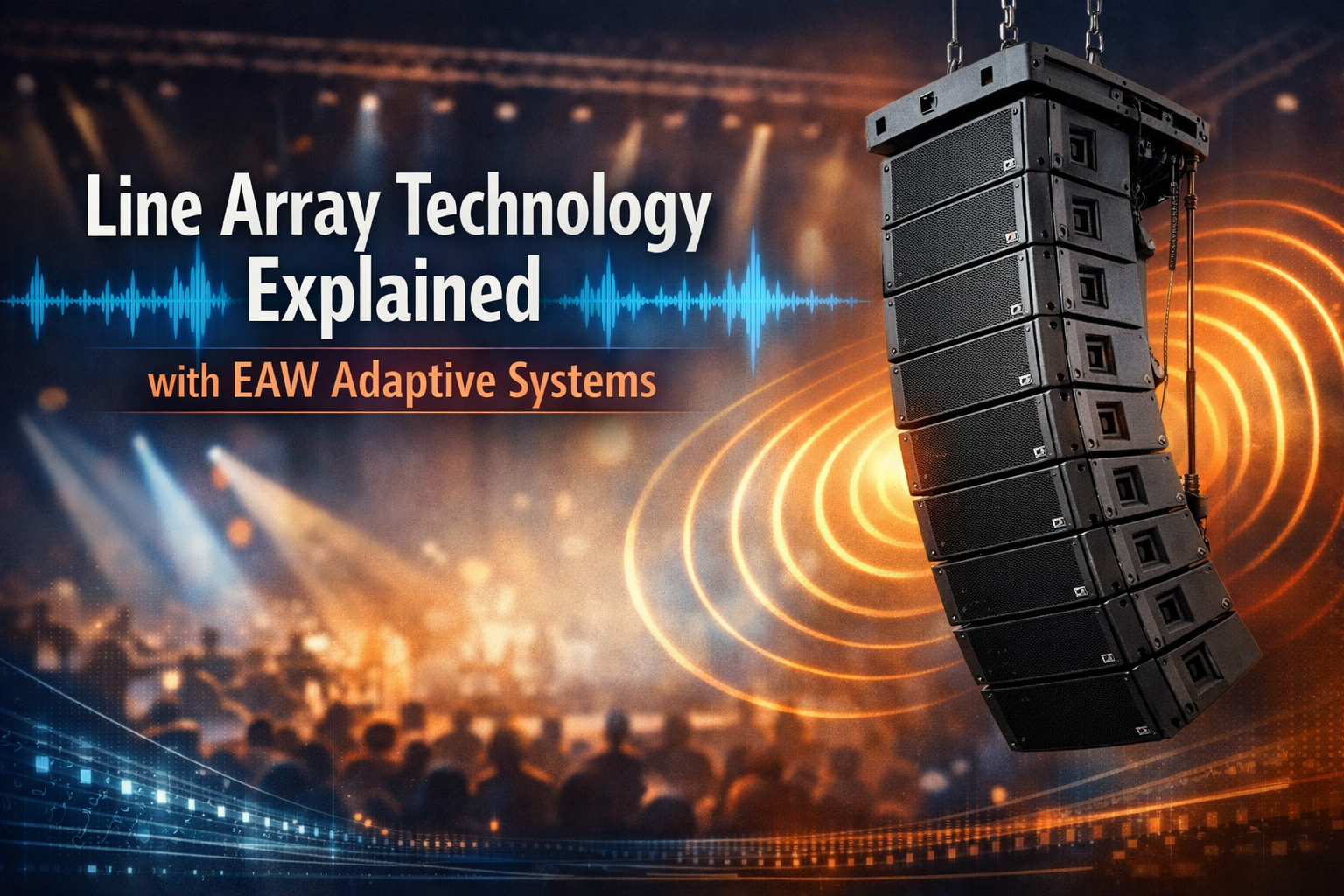
Line Array Technology Explained with EAW Adaptive Systems

How the EAW Adaptive System Redefines Line Array Technology

For years, the line array has been the backbone of professional sound reinforcement. You’ll find it everywhere—concerts, festivals, auditoriums, big venues—because it can throw sound evenly across long distances. But here’s the thing. Traditional line array systems rely a lot on mechanical design, and once they’re installed, flexibility drops fast. The EAW Adaptive System steps in with a smarter approach, changing how a modern line array actually behaves.

This blog breaks down how the EAW Adaptive line array differs from conventional systems and explains how coverage can be adjusted during a live show, without touching the rigging. No drama.

How Conventional Line Array Systems Work

In a conventional line array, coverage is shaped by physically curving the array and locking in fixed angles between cabinets. Those angles decide how sound spreads across the audience. Once the system is flown and aligned, that coverage stays the same for the entire event. Period.

If the audience layout changes or the venue demands something different, adjusting coverage mid-show is extremely hard. Sometimes impossible. That lack of flexibility is one of the biggest pain points with traditional line array systems. A real limitation.

The EAW Adaptive Line Array Approach

The EAW Adaptive line array takes a different route by using a straight hang design instead of a curved array. All cabinets are flown in a straight vertical line, which makes rigging simpler and setup quicker. It may look unusual at first glance, but the real innovation is hidden inside the enclosure.

Unlike conventional systems, the EAW Adaptive line array lets engineers modify sound coverage during the show without physically moving the speakers. This works through advanced digital signal processing and intelligent control of the drivers in each cabinet. Smart, not mechanical.

How Coverage Can Change During the Show

One of the biggest advantages of the EAW Adaptive system is its ability to change coverage without mechanical movement. Instead of relying on physical angles, the system uses driver density and enclosure design to steer sound electronically. Clean and efficient.

Key advantages of this adaptive approach include:
• Real-time control of sound coverage
• No need for mechanical or rigging changes
• Faster setup and improved safety
• Better flexibility for changing venue layouts

Because of this technology, it can behave like a curved system while staying in a straight hang configuration. Kind of clever.

Driver Density and Enclosure Design

Driver density is central to how the EAW Adaptive performs. The enclosure houses multiple high-frequency, mid-frequency, and low-frequency drivers, all controlled digitally for precise results.

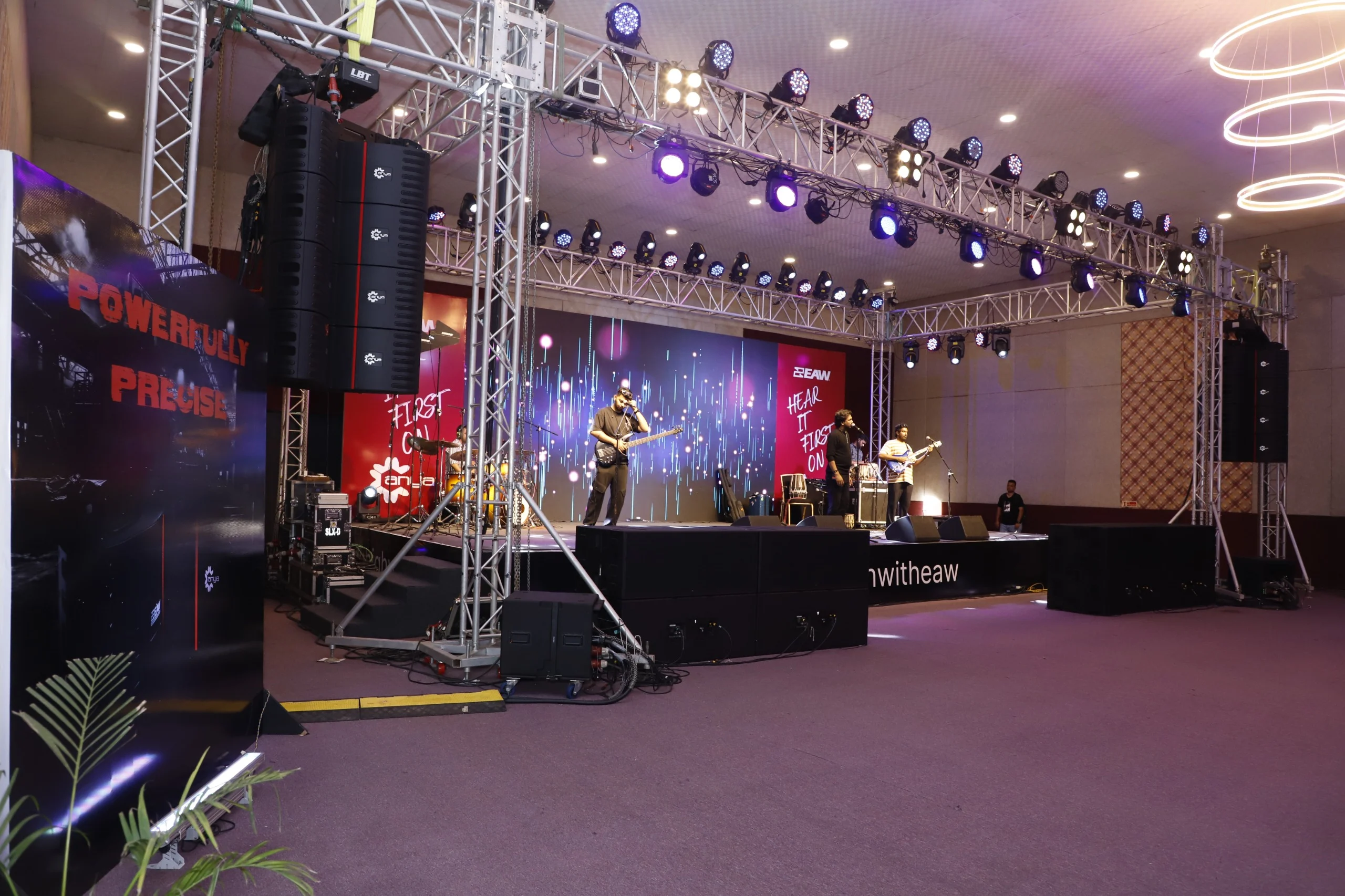
In the top-tier adaptive system, ANYA, the enclosure includes fourteen high-frequency drivers, six mid-frequency drivers, and two powerful, fifteen-inch low-frequency drivers. This high driver count gives engineers detailed control over sound direction, throw distance, and vertical coverage, making it ideal for large and complex venues.

Anna, the more compact adaptive system, follows the same design philosophy. It features eight high-frequency drivers, four mid-frequency drivers, and two ten-inch low-frequency drivers. Smaller footprint, strong performance. Despite its size, Anna offers impressive control and flexibility for medium-sized venues.

Why a Straight Hang Line Array Works Better

Because each driver group in the adaptive can be controlled independently, the system doesn’t depend on mechanical curvature to shape coverage. This allows the array to remain in a straight hang while still delivering accurate, adjustable sound.

This approach cuts setup time, removes the need for physical changes during a live show, and lets engineers react instantly to venue demands. No interruptions. Just control.

Traditional Line Array vs EAW Adaptive Line Array

• A traditional system depends on fixed mechanical angles and offers limited flexibility once installed.
• An EAW Adaptive uses digital control to adjust coverage in real time, without any physical movement.

The Future of Line Array Technology

The EAW Adaptive system marks a major step forward in its design. By moving control from mechanical adjustments to intelligent digital processing, it delivers higher flexibility, better precision, and consistent performance.

As live events continue to grow larger and more complex, adaptive systems like EAW’s are setting a new standard for the future of professional audio. And honestly. It feels overdue.

We are also launching a Tech Charcha series, where we will discuss EAW and its Adaptive Series in detail, covering real setups, practical use cases, and on-the-ground experiences from live events. To gain a deeper understanding of how adaptive line array systems function in real-world scenarios, follow us on our Instagram and YouTube channels for upcoming episodes and valuable insights, or contact us for more information.

Why Adaptive Line Array Systems Matter for Sound Engineers

Why Adaptive Line Array Systems Are Essential for Live Sound Engineers

Live sound engineering has changed a lot in recent years. Venues keep getting bigger, audiences expect more, and setup time feels shorter every season. In this fast-moving space, Adaptive Line Array Systems have become a practical answer for engineers and audio professionals handling live events. They bring more control, better consistency, and higher efficiency than traditional line arrays, which makes them a strong fit for today’s demanding workflows.

The speaker technology matters, of course. But the real edge appears when Adaptive Line Array Systems are paired with smart prediction tools like Resolution software. That combination helps engineers plan clearly and execute with confidence. Less guesswork. More certainty.

Understanding Adaptive Line Array Systems

Adaptive Line Array Systems are built to manage sound coverage electronically instead of depending only on physical angles and mechanical changes. This lets engineers shape sound accurately across the audience area, keeping clarity steady from the front row to the last seat.

For live events, that’s a big deal. Engineers can maintain controlled coverage even in tricky venues, outdoor shows, or temporary setups where acoustics can shift without warning. Sometimes wildly.

Why Live Sound Engineers Prefer Adaptive Line Array Systems

Live events come with their own set of pressures, and solutions need to be fast and reliable. Adaptive Line Array Systems answer that need with a smarter and more predictable workflow.

Key benefits for engineers include:

• More even sound coverage across large audience areas
• Less need for physical changes during setup
• Greater control over system behavior as conditions change

All of this frees audio professionals to focus on sound quality instead of fighting system limits. Which matters.

Predictable Performance in High-Pressure Environments

One major reason engineers trust Adaptive Line Array Systems is predictability. When schedules are tight and expectations are high, knowing what the system will do ahead of time is incredibly valuable.

This is where Resolution software becomes important. Built for EAW systems, Resolution lets engineers simulate the venue and audience layout before anything is installed. By defining audience zones and placing the system digitally, coverage and performance can be reviewed well before show day. A relief.

How Resolution Software Enhances Adaptive Line Array Systems

Resolution software works as a planning and verification tool that strengthens Adaptive Line Array Systems. Engineers can check whether their design choices will hold up in real conditions, reducing uncertainty during installation.

With predictive modeling, Resolution helps engineers:

• Visualize audience coverage
• Evaluate system interaction and balance
• Spot potential issues early in the design phase

This kind of preparation speeds things up once on site.

Faster Setup and Smarter Deployment

In live production, time is everything. Adaptive Line Array Systems, when designed using Resolution software, can dramatically cut setup and tuning time. After the system is installed, engineers connect to the network and load the pre-designed configuration.

Because the system was already tested digitally, only minimal changes are needed on-site. This streamlined approach is especially helpful for touring shows and large events. No rushing. Fewer surprises.

Consistency Across Different Venues

Keeping sound consistent from venue to venue is a constant challenge. It helps solve this by allowing engineers to reuse proven designs while adjusting for different audience layouts.

With Resolution software, audience size and system placement can be updated while keeping the same performance targets. This leads to reliable results in indoor halls, outdoor stages, and temporary event spaces. Again and again.

Reduced Physical Complexity for Audio Teams

Traditional line arrays often require exact mechanical angles and repeated adjustments. Reduce that burden by shifting much of the optimization into electronic control.

Resolution software supports this by making sure the system is planned correctly from the start. The result is less re-rigging, improved safety, and saved time for system technicians. Simple wins.

Building Confidence Through Data and Prediction

Today’s audio professionals depend on data to make confident decisions. It is backed by Resolution software give clear insight into how the system will behave, even before the event begins.

This predictive approach builds trust and lets engineers approach live shows with more control and less stress. Calm matters.

Conclusion

Adaptive Technoogy are now a core part of modern live sound production, offering flexibility, control, and consistent performance. When paired with Resolution software, they allow engineers to predict results, simplify deployment, and deliver reliable sound under pressure.

For live sound engineers and audio technicians, combining it with smart planning tools like Resolution creates a more efficient workflow—one that meets today’s live event demands with confidence and precision.

We are also launching a Tech Charcha series, where we will discuss EAW and its Adaptive Series in detail, covering real setups, practical use cases, and on-the-ground experiences from live events. To gain a deeper understanding of how adaptive line array systems function in real-world scenarios, follow us on our Instagram and YouTube channels for upcoming episodes and valuable insights, or contact us for more information.

EAW Adaptive Line Array System for Modern Live Sound Events

EAW Adaptive Line Array System: The Future of Live Sound Deployment

When we attend a concert or a large live event, sound quality plays a major role in the overall experience. Clear vocals, balanced music, and even coverage across the audience are expected as a standard today. The EAW Adaptive Line Array System has been developed to meet these expectations by changing how professional sound systems are designed and deployed. It offers a smarter and more efficient alternative to traditional line array setups, especially for modern live sound applications.

What Is the EAW Adaptive Line Array System?

The EAW Adaptive Line Array System is an advanced loudspeaker solution from EAW that uses digital processing to control sound coverage. Unlike conventional line arrays that depend on physical cabinet angles, this system manages dispersion electronically. As a result, the entire speaker array can be hung straight while still delivering accurate and consistent coverage across the venue. This approach reduces complexity and improves reliability during live events.

Traditional J-Curve vs Adaptive Straight Hang

For many years, J-curve line arrays have been the standard in concerts and large venues. They work well but often require precise angle calculations and experienced technicians on site. The adaptive straight-hang approach simplifies this process by moving most of the planning into the design stage.

Key differences include:

  • J-curve systems rely on physical angles for coverage

  • Adaptive systems use digital control for dispersion

  • Straight hang deployment reduces setup time

  • Results are more predictable from venue to venue

By removing the need for mechanical adjustments, adaptive systems make live sound deployment faster and more efficient.

How EAW Adaptive Line Array System Technology Manages Sound Coverage

One common question is how sound coverage remains even without a curved array. In the EAW Adaptive Line Array System, coverage is controlled through intelligent processing rather than physical alignment. Each speaker cabinet is programmed to cover a specific area of the audience, ensuring uniform sound from the front rows to the back.

This process includes:

  • Designing the venue digitally before the event

  • Assigning coverage zones to each cabinet

  • Controlling output and frequency response electronically

The result is consistent sound quality, improved speech clarity, and balanced audio across the entire listening area.

Software-Based Design for Real Venues

Before the system is installed on site, sound engineers design the entire setup using dedicated software. This step allows them to visualize the venue, place the speaker arrays accurately, and calculate performance in advance. Once the design is complete, presets are created and uploaded to the speakers.

This workflow offers several advantages:

  • Less time spent on physical setup

  • Minimal on-site adjustments

  • Greater confidence in system performance

For touring engineers and event professionals, this software-driven approach saves time and reduces stress during live productions.

Benefits for Sound Engineers and Event Professionals

The EAW Adaptive Line Array System is especially valuable for professionals who work across different venues and tight schedules. Its design supports fast deployment and consistent results, making it suitable for both touring and fixed installations.

Key benefits include:

  • Faster setup and teardown

  • Reliable and repeatable performance

  • Reduced dependence on complex rigging adjustments

  • More focus on mixing and show quality

Rental companies and event production teams also benefit from improved efficiency and smoother operations across multiple events.

Final Thoughts

The EAW Adaptive Line Array System represents a significant evolution in live sound technology. While traditional J-curve line arrays are still widely used, adaptive straight-hang systems offer clear advantages in terms of speed, accuracy, and consistency. By combining intelligent software design with digital control, this system delivers high-quality sound while simplifying the entire deployment process.

As live events continue to grow in scale and complexity, adaptive line array systems are becoming an important part of the future of professional audio. For anyone looking to deliver reliable sound with greater efficiency, the EAW Adaptive Line Array System stands out as a forward-thinking solution.

We are also launching a Tech Charcha series where we will talk in detail about EAW and its Adaptive Series, covering real setups, practical use cases, and on-ground experiences from live events. If you want to understand how adaptive line array systems work in real-world situations, stay tuned and follow us on our Instagram and YouTube channels for upcoming episodes and insights, or contact us for more information.
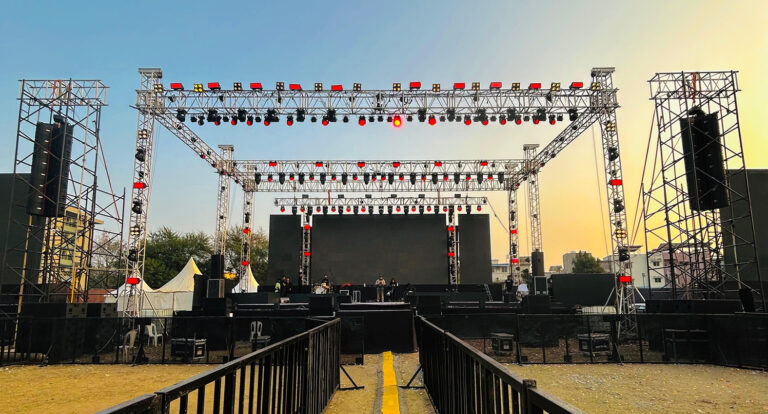
EAW Features Pink Noise Professionals for Pioneering Anya Deployment in India

We are proud to share that Pink Noise Professionals has been featured on the official EAW website for facilitating the first-ever deployment of the EAW Anya Adaptive Sound System in India. This recognition marks a significant milestone for us, as we continue our mission to bring cutting-edge audio technology to the Indian market.

The feature highlights our role in supporting Durgesh Sound and Lighting Systems with their adoption of the Anya system—an innovative, scalable solution known for its adaptive performance and unmatched sound precision.

Being acknowledged by a global pro audio leader like EAW is both an honor and a testament to our commitment to excellence in sound. We thank our partners, clients, and supporters who made this possible.

Read the full article on EAW’s official website here.

Pink Noise Shines as Elipson Wins Best Home Theatre Brand Award at NCN AV Awards 2024

We’re thrilled to announce that Elipson has been crowned the Best Home Theatre Brand of 2024 at the prestigious NCN AV Solution Awards! This recognition reflects the unwavering commitment of the Pink Noise team to deliver premium audio experiences and innovative home theatre solutions. Winning this award is not just an honor—it’s a celebration of the trust and love our community has shown us. We’re proud to represent Elipson in India and share this success with all of you. Here’s to setting new benchmarks in the world of sound!

Difference Between Line Array and Column Array Speakers

Difference Between Line Array and Column Array Speakers

If you’ve ever attended a concert, a wedding, or even a school assembly, you’ve probably seen big speakers on the stage or hanging from tall stands. But did you know there are different speaker setups for different events? Two common types are line array speakers and column array speakers.

What Is a Line Array Speaker?

A line array speaker system is made by stacking several identical loudspeaker cabinets in a vertical line. Each cabinet include

s multiple drivers — that means it has separate parts to handle low, mid, and high frequencies, usually a woofer for bass and a tweeter for treble.

What makes line arrays special is their adaptive sound coverage. When these speaker boxes are arranged in a curved line (like a banana shape), they create a controlled and focused sound beam. This helps the sound travel far, even across huge venues like stadiums or open grounds, while still being clear and even at every distance.

Because of how the wavefronts from each speaker interact, line arrays reduce sound reflections from the ceiling and floor. This gives you better clarity and less echo in large or open spaces. That’s why they’re used in concerts, festivals, sports arenas, and outdoor events.

But keep in mind, line arrays are technically advanced systems. They need careful tuning, time alignment, and sometimes digital signal processing (DSP) to perform at their best. They’re not plug-and-play systems — they’re designed for serious sound work.
Line Array Speaker

What Is a Column Array Speaker?

Now, let’s look at the column array speaker. It also has multiple small drivers stacked vertically, but it comes in a single, slim cabinet. These drivers are usually full-range, meaning they handle both highs and mids, sometimes supported by a separate subwoofer for bass.

The big advantage of column speakers is their narrow vertical dispersion and wide horizontal coverage. This means they throw sound outwards across a room without bouncing too much off the floor and ceiling. The result is clear speech and natural music, even in echo-prone places like churches, auditoriums, or conference halls.

Some modern column arrays even come with digital beam steering, which means they can digitally control the direction of the sound without physically tilting the speaker. This technology is great for tricky room layouts.

Column arrays are also lightweight, portable, and easy to set up. They are commonly used in places where sound clarity is more important than loudness, like classrooms, places of worship, hotel ballrooms, and cafes.

Coloum Array Speaker

Easy Way to Remember the Difference

Still confused? Here’s a simple trick:

  • Think of a line array like a lighthouse – tall, powerful, and can be seen (or heard) from far away.

  • Think of a column array like a lamp post – helpful nearby, but doesn’t reach very far.

The Technical Differences

Here’s where things get a little technical — but don’t worry, we’ll keep it simple:

  • Drivers: Line arrays use multiple speaker boxes, each with separate drivers for highs, mids, and lows. Column arrays use many small full-range drivers in one cabinet.

  • Sound Control: Line arrays offer long-throw sound with vertical control for massive coverage. Column arrays offer short to mid-throw sound, with narrow vertical and wide horizontal coverage.

  • Coverage Pattern: Line arrays are meant for thousands of people in large open spaces. Column arrays are ideal for a few hundred people in indoor settings.

  • Installation: Line arrays often need rigging, tuning, and DSP for best results. Column arrays are plug-and-play, and sometimes include built-in mixers or Bluetooth.

Why Choose a Line Array Speaker?

You should go for a line array speaker if:

  • You’re organizing a concert, festival, or outdoor rally.

  • You need the sound to reach people standing hundreds of feet away.

  • Your event has a large crowd and needs even sound distribution.

Line arrays are made to handle loud music, long distances, and big spaces. They may take more time to install, but the sound quality is excellent for large audiences.

Why Choose a Column Array Speaker?

Choose a column array speaker if:

  • You are hosting a wedding, corporate event, conference, or school function.

  • The audience is close, like within a room or hall.

  • You need a speaker that is easy to carry, quick to set up, and budget-friendly.

Column arrays are perfect for situations where clear speech and soft music are needed. They’re also great for portable sound systems and small bands.

Final Thoughts

Line array and column array speakers are two smart solutions for very different sound needs. Line arrays are the heavy lifters — loud, powerful, and engineered for long-range audio. Column arrays are the clever helpers — compact, clear, and perfect for speech and indoor use. Both line array and column array speakers have their strengths. One is not better than the other — they’re just designed for different needs. Knowing which one to use can help make your event sound amazing.

So next time you walk into a hall or a concert and see those tall speakers, you’ll know exactly what you’re looking at — and why they’re there!

Professional Line Array Speakers Transform the Audio Experience

Professional Line Array Speakers Transform the Audio Experience for Large Venues

In professional audio, achieving clear and constant sound coverage in massive venues has always been a mission. However, Professional Line Array Speakers have revolutionized the audio industry using offering extraordinary sound and precision. These superior speaker systems are designed to deliver uniform audio dispersion, making sure every corner of the venue stories the same immersive sound.

What Are Professional Line Array Speakers?

Professional Line Array Speakers are a sequence of loudspeakers organized vertically or horizontally. This configuration allows sound waves to interact in a controlled way, creating a cohesive and effective sound output. Unlike traditional audio systems, which undertake sound in all guidelines, line array speakers are cognizance of sound strength, reducing echo and improving clarity.

EAW NTX Series: Merging Innovation with Efficiency

Building upon the achievement of their Radius line, EAW NTX Series promises excessive-overall performance answers while minimizing setup times. A standout function of the NTX Series is OptiLogic™, which presents automated array self-detection and instant optimization, consisting of air loss repayment. This era allows each loudspeaker to talk with adjoining devices, reducing setup mistakes and maximizing the array’s overall performance.

The NTX210L model exemplifies EAW’s commitment to advanced sound. This active, bi-amped articulated array capabilities dual 10-inch LF drivers and an unmarried 1.4-inch go-out HF driver established to EAW’s patented Isophasic Waveguide. This design guarantees a seamless aggregate of a couple of array modules, turning in regular sound coverage throughout massive venues.

JBL VTX Series: Power and Precision

JBL’s VTX Series is renowned for its effective performance and advanced generation. Designed for massive-scale venues and excursions, the VTX Series includes JBL’s proprietary Differential Drive® generation, which reduces weight at the same time as enhancing output and reliability. The collection also capabilities advanced DSP abilities, taking into consideration particular manage over sound dispersion and tonal balance.

L-Acoustics K2 Series: Versatility and Scalability

The L-Acoustics K2 Series is celebrated for its versatility and scalability. Suitable for each indoor and out of doors package, the K2 gadget offers adjustable horizontal directivity, permitting sound engineers to tailor the coverage to precise venue necessities. Its lightweight layout and rigging device facilitate quick setup and configuration, making it a fave among visiting specialists.

Key Features of Professional Line Array Speakers

High Power Handling Capacity: This audio system can handle excessive wattage without compromising sound high-quality.

Advanced DSP Technology: Digital Signal Processing allows for best-tuning of audio frequencies and put-off settings.

Compact and Lightweight Design: Despite their effective performance, Professional Line Array Speakers are regularly lightweight and easy to install.

Durability and Reliability: Built to withstand rigorous use in live activities and outside settings.

Applications of Professional Line Array Speakers

Concerts and Music Festivals:
Professional Line Array Speakers are a staple in huge-scale concerts and tune fairs, where clear and effective sound is important.

Corporate Events and Conferences:
In corporate occasions and seminars, these audio systems ensure that displays and speeches are delivered with clarity.

Houses of Worship:
Line array speakers are often utilized in church buildings and spiritual gatherings to offer clear audio to large congregations.

Stadiums and Arenas:
For wearing events and big-scale public gatherings, Professional Line Array Speakers offer the necessary sound coverage.

How to Choose the Right Professional Line Array Speakers

When deciding on Line Array Speakers for your venue, take into account the following elements:

Venue Size and Acoustics: Assess the size and format of the venue to determine the desired speaker configuration.

Power and Wattage Requirements: Ensure the speakers can manage the electricity output wanted for the event.

Brand Reputation and Quality: Choose reputable manufacturers recognized for his or her reliability and performance.

Budget and Installation Costs: Factor in the price of the speakers and installation services.

Conclusion

However, Professional Line Arrays Speakers like EAW NTX, JBL VTX Series, and L-Acoustics K2 Series have converted the audio revel in massive venues using turning in constant, clear, and effective sound. Their superior layout and generation allow for unique sound dispersion, making them the favored preference for concerts, conferences, and stadiums. Whether you are an audio engineer or an occasion organizer. Investing in Line Array Speakers is the important thing to raising your sound machine and offering unforgettable audio enjoyment for your target audience.

Gaming Headset for Live Streaming with Superior Sound Quality

Gaming Headset for Live Streaming The Ultimate Guide to Choosing the Best One

Live streaming has taken gaming global through typhoons. If you’re trying to enhance your setup, you want a gaming headset for live streaming to stay streaming to ensure great audio and clear communication with your target market and teammates. A true gaming headset can make a big difference in your streaming enjoyment. Here’s how to pick a quality one.

Best Gaming Headset for Live Streaming with High-Quality Microphone

An extraordinary microphone is vital for live streaming. Viewers assume clear and crisp audio and a negative-exceptional microphone can wreck the streaming enjoyment. The quality gaming headset for stay streaming must have noise cancellation, clear voice transmission, and low latency for actual-time communique.

Top picks:

Beyerdynamic MMX 300 Pro Excellent audio and microphone great

SteelSeries Arctis Nova Pro Great for professional streamers

Razer BlackShark V2 Pro Wireless with THX spatial audio

Best Budget Gaming Headset for Live Streaming Without Compromising Quality

Not every streamer wants to lay out a fortune on their setup. Finding a low-cost gaming headset with a mic for streaming is essential for beginners and budget-aware game enthusiasts. Many finances-pleasant alternatives offer awesome sound excellent and a respectable microphone without breaking the bank.

Great price range-friendly picks include HyperX Cloud Stinger 2, Corsair HS70 Pro, and Logitech G432.

Surround Sound Gaming Headset for Live Streaming and Immersive Experience

For live streamers who play FPS games or RPGs, having a surround sound gaming headset enhances situational cognizance and makes the gaming reveal extra immersive. The first-rate gaming headset for stay streaming should provide 7.1 surround sound or spatial audio to provide accurate directional sound that enables competitive gaming.

Best surround sound headsets:

Astro A50 Wireless Immersive audio with Dolby Atmos

Logitech G Pro X Wireless Professional-grade sound

EPOS H6Pro Open-returned and closed-returned options to be had

Lightweight Gaming Headset for Live Streaming and Long Gaming Sessions

Comfort is a vital element, particularly for streamers who recreation for extended hours. Choosing a lightweight gaming headset for lengthy hours of gaming ensures consolation without causing strain on your head and ears.

Recommended fashions encompass Beyerdynamic MMX 300 Pro, Razer Kraken V3 X, and SteelSeries Arctis 7P.

Gaming Headset with RGB Lighting and Custom EQ Settings for Live Streaming Setup

Many game enthusiasts opt for a stylish setup, and a gaming headset with RGB lighting fixtures and custom EQ settings permits personalization while enhancing audio greatly. Open-lower back vs. Closed-again gaming headsets for competitive gaming is any other consideration, as open-returned headsets offer a much wider soundstage whilst closed-returned designs provide better noise isolation.

Gaming Headset for Live Streaming 1

Brand-Specific Comparison Best Gaming Headset for Live Streaming

Comparing one-of-a-kind gaming headsets is critical to find the right match. Some key comparisons consist of Logitech G Pro X vs. Razer BlackShark V2, SteelSeries Arctis Nova Pro vs. Astro A50, and Beyerdynamic MMX 300 Pro vs. HyperX Cloud Alpha.

How to Fix Common Issues with Gaming Headset for Live Streaming

Even the pleasant gaming headset can also reveal occasional problems. Here are some common problems and answers:

Microphone no longer operating? Check for driver updates or mic settings.

Connectivity problems? Reset the headset and reconnect through Bluetooth or USB.

Audio lag? Use a stressed-out connection to decrease latency.

Background noise in the mic? Enable noise suppression in streaming software.

Low quantity? Adjust sound settings on the PC or console.

Gaming Headset with the Best Mic for Discord and Streaming

For streamers who use Discord, selecting a gaming headset with a first-class mic guarantees noise isolation, built-in voice enhancement, and compatibility with Discord’s audio processing. The nice selections include Beyerdynamic MMX 300 Pro, Logitech G Pro X, and EPOS B20.

Conclusion Choosing the Best Gaming Headset for Live Streaming

When deciding on a first-class gaming headset for stay streaming, don’t forget microphone first-rate, consolation, surround sound capabilities, price range, wi-fi vs. Stressed alternatives, and customizability. Whether you need a surround sound gaming headset for FPS games or a low-priced gaming headset with a mic for streaming, deciding on the right one complements your gaming and streaming revel. Investing in a high-quality gaming headset ensures an immersive and engaging setup for you and your audience.

Best MIDI Controllers 2025 Find the Perfect Gear for Your Studio

Best MIDI Controllers 2025 Find the Perfect Gear for Your Studio

MIDI controllers are crucial to any music manufacturer’s or performer’s toolkit. Whether you are a studio musician, live performer, or DJ, choosing the proper MIDI controller can increase your workflow and creativity. In 2025, the marketplace is full of innovative options that offer extraordinary features, superior build satisfaction, and seamless integration with digital audio workstations (DAWs). In this weblog, we will discover the excellent MIDI controllers 2025 has to provide and help you locate the precise health to your desires.

Best MIDI Controllers 2025 for Studio Professionals

Studio manufacturers need MIDI controllers with precision, superb keys, and flexible control options. Here are some of the top choices for studio musicians in 2025:

Icon Pro Audio V1-M

The Icon Pro Audio V1-M is a particularly responsive MIDI controller designed for professional studio manufacturing. With its semi-weighted keys, assignable faders, and seamless DAW integration, it complements workflow performance for music manufacturers. The customizable control layout makes it an top notch preference for sound designers and composers seeking out precise and expressive performance.

Akai Professional MPK261

The Akai Professional MPK261 is a powerhouse MIDI controller with sixty one semi-weighted keys, RGB-backlit drum pads, assignable knobs, faders, and a continuing integration with important DAWs. This controller is ideal for manufacturers who need full control over their virtual and hardware contraptions.

Native Instruments Komplete Kontrol S49 MK3

This MIDI controller gives deep integration with Komplete software program, making it a super preference for sound designers and producers. The absolutely weighted keys and high-decision color show decorate the workflow, while the Smart Play function permits for intuitive chord and scale features.

Best MIDI Controllers 2025 for Live Performances

Live performers want a MIDI controller that is portable, long lasting, and responsive. Here are some of the high-quality options available:

Icon Pro Audio V1-X

The Icon Pro Audio V1-X is built for performers who want closing control over their stay sets. With its robust faders, assignable knobs, and dynamic pads, it permits seamless transitions and actual-time modulation, taking into account an expressive and interactive performance revel in.

Novation Launch key forty nine MK3

This controller is a go-to for stay performers because of its light-weight design, effective integration with Ableton Live, and responsive pads. It capabilities scale and chord modes, making it best for live improvisation.

ROLI Seaboard Rise 2

The ROLI Seaboard Rise 2 redefines MIDI controllers with its gentle-contact, strain-touchy keys that allow for fluid expression and MPE (MIDI Polyphonic Expression) support. It is a first-rate desire for performers who want to carry unique sound modulation to their indicates.

Best MIDI Controllers 2025 for Music Producers

Producers want controllers that provide deep DAW integration, intuitive controls, and expressive keys. Here are a few pinnacle picks for song production:

Icon Pro Audio V1-M

For song producers who want a stability of portability and capability, the Icon Pro Audio V1-M gives smooth DAW control, programmable faders, and intuitive software mapping. Its seamless integration with leading song production software program guarantees an easy manufacturing workflow.

Akai Fire Controller

Designed in particular for FL Studio users, the Akai Fire Controller offers a compact and intuitive format for beat-making and stay triggering of loops and samples. It is a must-have for digital tune producers and DJs.

M-Audio Oxygen Pro 25

This compact MIDI controller presents expert features like automobile-mapping to DAWs, assignable knobs, and velocity-sensitive pads—all at an inexpensive charge.

Why MIDI Controllers Matter in 2025

Technology is hastily evolving, and MIDI controllers have come to be extra than simply keyboards. They now include contact-sensitive pads, deep DAW integration, motorized faders, and customizable manipulate layouts that cater to every musician’s wishes. Whether you’re into electronic music manufacturing, scoring movies, or appearing stay, the proper MIDI controller helps you achieve the excellent feasible sound.

Budget Friendly MIDI COntroller

If you’re on a budget but still need a effective MIDI controller, here are some exceptional options:

Icon Pro Audio V1-X

A budget-pleasant but expert-grade MIDI controller, the Icon Pro Audio V1-X presents high-quit features at an cheap price. Its speed-sensitive keys and assignable controls make it a super desire for entry-stage and intermediate musicians.

Alesis V49

A finances-pleasant but characteristic-wealthy MIDI controller with velocity-touchy keys and pads. It is an extremely good choice for novice manufacturers.

Arturia MiniLab MKII

This compact MIDI controller is ideal for the ones seeking out portability with out compromising on performance. It gives assignable knobs, velocity-sensitive keys, and seamless integration with maximum DAWs.

Conclusion: Choosing the Right MIDI Controller for Your Needs

The first-class MIDI controllers 2025 offers cater to each kind of musician, from beginners to specialists. Whether you are seeking out a high-quit studio controller, a overall performance-orientated MIDI keyboard, or a finances-pleasant alternative, there’s a perfect match for you.

If you are seeking out the excellent MIDI controllers in 2025, spend money on one that suits your workflow and musical style. With the right MIDI controller, you may liberate new creative possibilities and take your music manufacturing and overall performance to the next level.

How Line Array Speakers are Revolutionizing Live Audio with Advanced Technology

How Line Array Speakers are Revolutionizing Live Audio with Advanced Technology

Live sound reinforcement has come an extended way, evolving from conventional loudspeaker setups to enormously sophisticated Line Array Speakers. Whether it’s a large outdoor concert or a excessive-profile company event. The call for for crystal-clean audio and steady sound insurance has led to good sized advancements in speaker era. Among the maximum modern traits on this domain is the adaptive Line Array Speaker machine, transforming the way sound is delivered in stay environments.

The Evolution of Line Array Speakers

The idea of Line Array Speakers isn’t new, however its application in modern live audio has revolutionized sound distribution. Unlike traditional speakers, which disperse sound in a couple of guidelines and often cause uneven coverage, line array generation guarantees uniform sound propagation. The vertically aligned arrangement of multiple speaker elements in a line array permits for precise manage over sound dispersion, ensuring that every target market member, no matter their role, studies the equal stage of clarity and intensity.

Advanced Technology

Technological advancements have propelled Line Array Speakers into a new generation of performance and overall performance. Digital sign processing (DSP), beam-guidance era, and complicated rigging mechanisms have made line arrays more adaptable to numerous acoustic environments. Features which includes auto-calibration, actual-time tracking, and customizable coverage patterns allow sound engineers to fine-track the audio experience based on venue acoustics and target audience placement.

One of the most incredible innovations on this area is Adaptive Performance Technology. Unlike traditional line arrays that require guide configuration and mechanical changes, adaptive line arrays dynamically regulate their output in real time. This manner the device can mechanically optimize coverage, removing the want for considerable tuning and repositioning, making it a recreation-changer for live sound engineers.

EAW Anya Series – A Benchmark

When discussing the maximum superior Line Array Speakers, it is not possible to disregard the EAW Anya series. As a pioneer in adaptive sound era, the Anya collection is designed to redefine live sound reinforcement. These audio system incorporate Adaptive Performance Technology, enabling sound engineers to attain exceptional manipulate over dispersion patterns with out physically altering the setup.

What units the Anya series aside is its potential to create a exceedingly controlled sound subject the use of state-of-the-art DSP algorithms. The system lets in for precision tuning with out the need for complicated mechanical modifications, making it one of the maximum flexible solutions for stay events. With its capacity to deliver consistent, first-rate audio throughout numerous venues. The Anya series has set a brand new benchmark for line array era.

Why Line Array Speakers Are the Future of Live Audio

The impact of Line Array Speakers on stay audio is undeniable. Their ability to provide even sound distribution, lessen undesirable reflections, and adapt to unique venue requirements makes them fundamental for live shows, theaters, corporate occasions, and stadiums. With innovations like adaptive beamforming and advanced DSP integration. The destiny of stay sound is turning into more and more clever and efficient.

For audio specialists seeking the next degree of overall performance. Making an investment in modern line array era is now not a luxury but a need. As the call for for immersive and high-constancy live sound experiences continues to develop. Structures like the EAW Anya collection exemplify how technology is shaping the following era of expert audio answers.

Conclusion

The evolution of Line Array Speakers has redefined live sound reinforcement, making first-rate. Adaptable audio more on hand than ever earlier than. With improvements in DSP, adaptive beamforming, and actual-time manage, those structures are reworking how sound is introduced in massive venues. Among the leaders on this space, the EAW Anya series stands as a testomony to what’s viable whilst innovation meets live audio. As technology keeps to push the boundaries. One issue is sure—There are here to revolutionize the enterprise for years to come.

GET SOCIAL WITH US & STAY UP TO DATE!